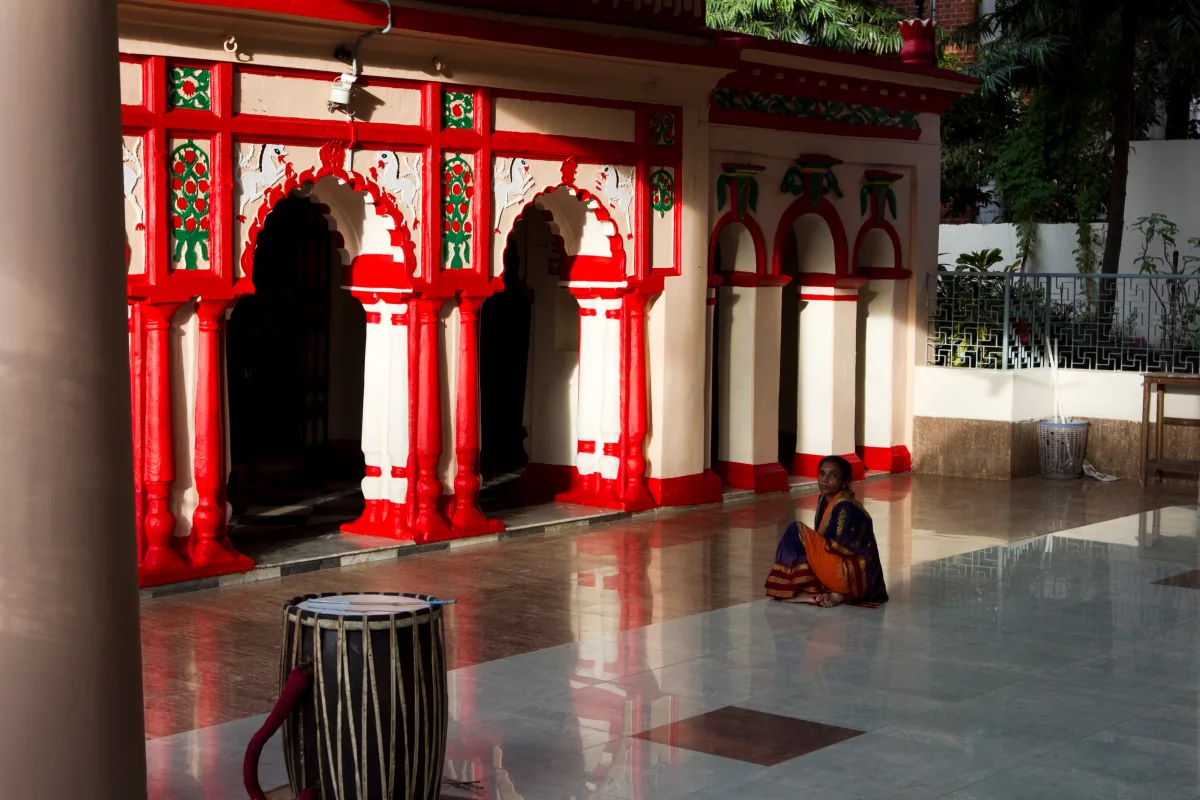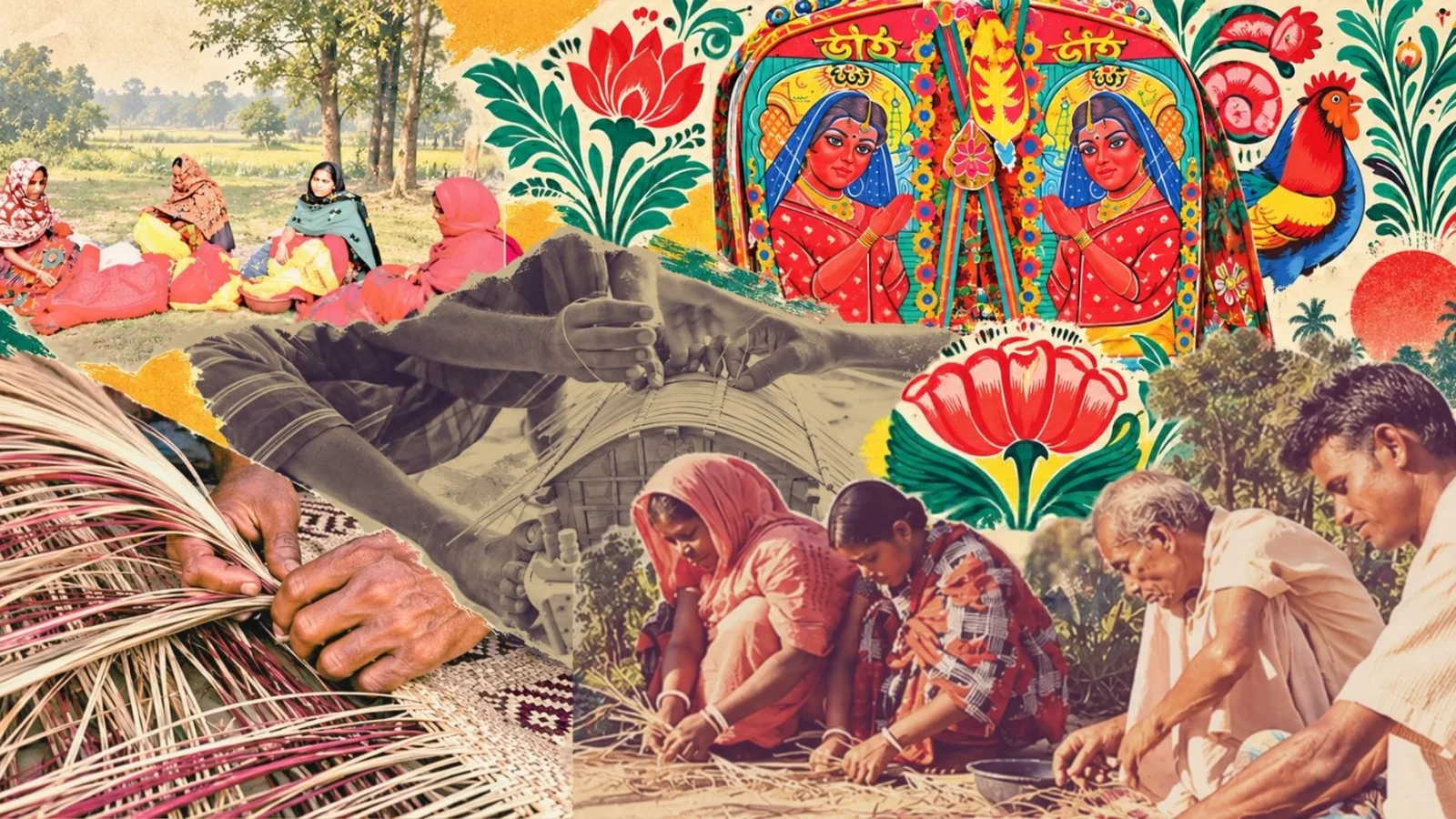
From the carved terracotta of Kantajew Temple to the domes of Bagerhat's mosque city, Bangladesh's monuments draw crowds and rightly command protection. But much of what makes Bangladesh cannot be captured in a photograph: a Baul song floating over a village at dusk, a weaver creating a Jamdani motif thread by thread, the art of raising a house above floodwaters, or a festival that transforms a city street into a river of masks and drums.
This is intangible cultural heritage (ICH). UNESCO's 2003 Convention describes it as the practices, representations, expressions, knowledge and skills that communities regard as part of their cultural identity, and groups it into five domains: oral traditions and expressions, including language; performing arts; social practices, rituals and festive events; knowledge and practices concerning nature and the universe; and traditional craftsmanship. Unlike a building, it resides in people, and that is what makes it so fragile.
A monument may lie for many years waiting to be restored. A tradition cannot. If the last person who knows a song, a recipe, a healing practice or a weaving technique passes away without passing that knowledge on to anyone else, it is lost forever.
Bangladesh already has cultural treasures that the world has recognised. Over the past two decades, Jamdani weaving, Baul songs, Mangal Shobhajatra, Shital Pati and Rickshaw Painting have been added to UNESCO's Representative List of the Intangible Cultural Heritage of Humanity. There are hundreds of lesser-known practices beyond these well-known examples, such as the craft of boatbuilding and the embroidered nakshi kantha quilt, which are being reinvented and adapted to the changing context of society.
However, these traditions face increasing pressure. Many are threatened by globalisation, rapid urbanisation, environmental degradation and the growing attraction of Western-oriented knowledge. Young people move to urban areas, spend more time in front of screens and rarely sit with elders. Heritage is also severely underrepresented in schools.
The case for ICH is sometimes made in purely sentimental terms: it is ours, and it is beautiful. Both are true. But research on Bangladesh points to at least five reasons that go well beyond nostalgia.
Identity and belonging: Young people who are familiar with local folklore, languages, music, festivals and history, preferably through their elders, develop confidence and empathy. That foundation can help them cope with the loneliness of rapid change and extended periods spent in front of screens. But for many urban students, especially those studying in English-medium schools and institutions with a strong emphasis on science, there are few opportunities to learn about local traditions.
Social cohesion: Bangladesh is home to more than 45 ethnic groups and many religious traditions. Familiarity with the practices of indigenous peoples, hill communities and other minority groups can help break down stereotypes and foster respect. In this regard, ICH is a means of promoting dialogue and peacebuilding, while preserving minority identities within a shared national narrative.
Livelihoods: Culture is also an economy. UNESCO estimates that in 2022, the cultural and creative industries globally generated more than US$2.25 trillion and employed more than 30 million people, mostly young people. There are numerous employment opportunities, particularly for rural youth, in handwoven textiles, crafts, performing arts, design, digital storytelling and heritage tourism. This is important in Bangladesh, where approximately 7.2 per cent of the youth labour force is unemployed, and the majority of unemployed young people live in rural areas. The World Travel & Tourism Council (WTTC) estimates that travel and tourism accounted for 3.1 per cent of GDP and 3.0 per cent of employment in 2024.
Practical knowledge: Many communities possess detailed, time-tested knowledge of sustainable farming, herbal medicine and ways of surviving floods and storms. Designing houses to withstand floods, agricultural practices adapted to seasonal changes and traditional village methods of forecasting disasters are not museum artefacts. They represent valuable cultural knowledge from which architects, environmental scientists and disaster managers can learn in the context of a changing climate.
Gender and inclusion: Women are the primary custodians of intangible heritage in many Bangladeshi communities, whether through food traditions, artisanal skills, oral traditions or rituals. Documenting and recognising this work can provide women with the recognition they have long deserved, while also creating leadership opportunities for female students in heritage research, protection and safeguarding.
Heritage can remain relevant only if it is embraced by every generation, and Bangladesh has a remarkably young population. The median age is approximately 26 years, and over 54 million people are between the ages of 18 and 35, the age range defined by the National Youth Policy. The demographic dividend can only be realised if young people are educated and gainfully employed, and heritage can be an important component of that investment.
At present, however, this potential remains largely untapped. There are 178 universities registered with the University Grants Commission, of which only 248 academic departments offer courses related to intangible heritage, spread across disciplines such as literature, sociology, anthropology, folklore, architecture, music and tourism. Students of business, law, engineering, computer science and medicine rarely encounter intangible heritage in their studies, although their skills could contribute significantly to its preservation and development.
The solution, according to researchers, is to regard young people as custodians rather than merely audiences. The first step is to introduce every student to heritage, followed by opportunities for field schools and apprenticeships with artisans and performers, the establishment of campus heritage clubs, and training and seed funding for teachers and students. The goal is to foster a sense of ownership, ensuring that heritage is lived, developed and protected by young people rather than simply studied.
Technology is sometimes seen as an enemy of heritage, but it can also become its ally. Young Bangladeshis, who are increasingly comfortable navigating the internet and digital platforms, can record songs, crafts and rituals for digital archives, create virtual museums, produce digital content, podcasts and videos, and map living traditions through interactive platforms. Such digital documentation and exhibitions can help preserve knowledge that might otherwise disappear with its last practitioners, while also creating new career opportunities in the creative and technology sectors. Heritage that is shared through screens, and shaped by the communities and individuals who share it, can continue to evolve and remain relevant.
This is not only a national concern. Under Target 4.7 of the 2030 Agenda, the United Nations emphasises the need for education to promote an appreciation of cultural diversity and culture's contribution to sustainable development, while Sustainable Development Goal (SDG) Target 11.4 calls for stronger efforts to safeguard cultural and natural heritage. Without the awareness, participation and leadership of young people, neither objective can be fully realised. The connections extend to several other goals, including quality education, gender equality, decent work, reduced inequalities, climate action, peace, strong institutions and partnerships.