This article is for information only. It is not personal financial advice, and property investment carries risk.
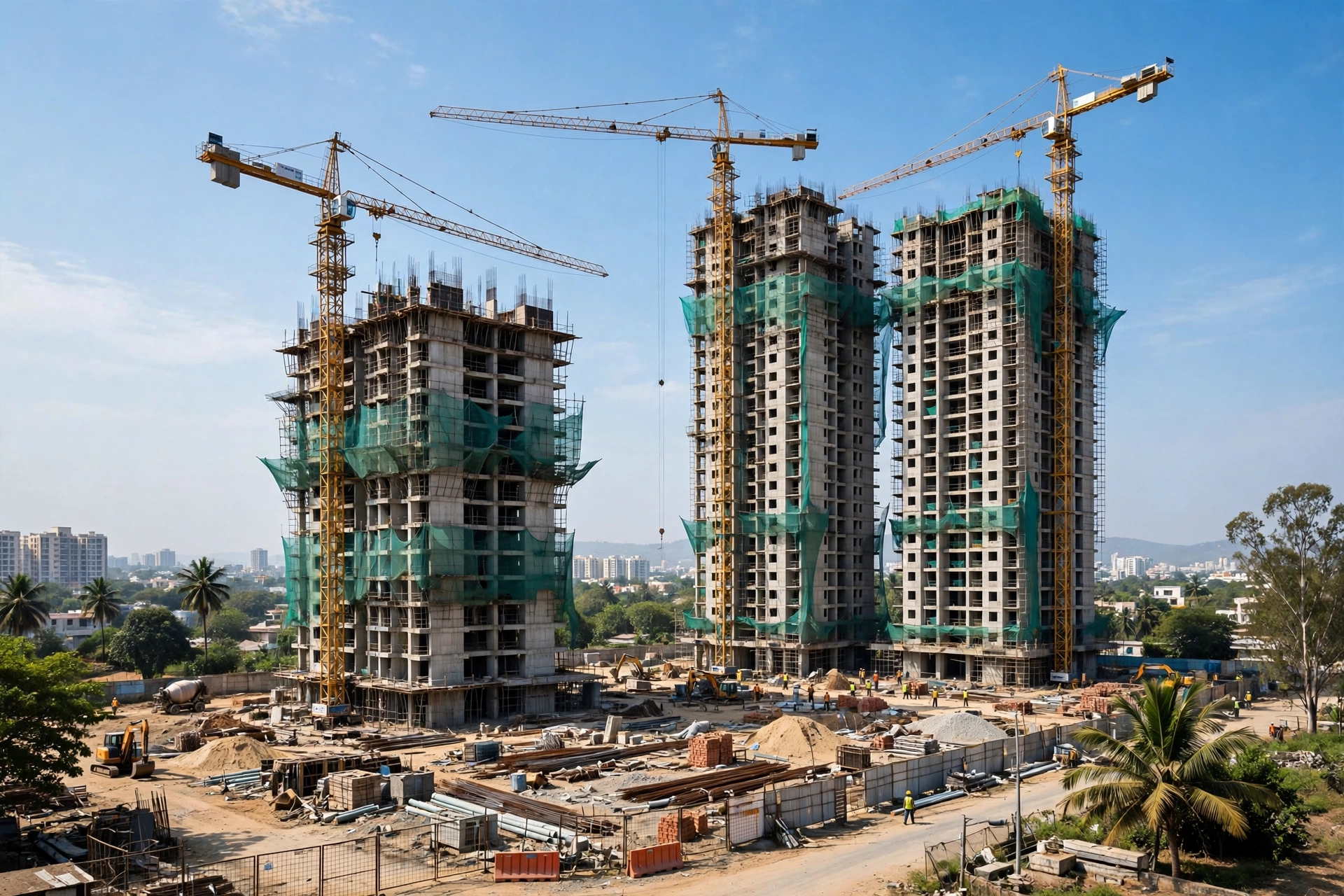
India's residential market entered the festive season with modest sales growth and a sharp rise in new supply. According to Anarock's Q3 2026 report, housing sales in the top seven cities rose 3 per cent year on year to about 1,00,200 units in July–September, from 97,080 units a year earlier, with sales value up 2 per cent to about Rs1.55 lakh crore. New launches rose 18 per cent to about 1,14,300 units, from 96,690 units in Q3 2025.
Average residential prices rose 7 per cent year on year to Rs9,714 per square foot. But unsold inventory also rose 12 per cent to about 6,30,600 units, with the overall inventory overhang steady at 19 months. In other words, supply is growing faster than sales — a combination that usually caps further price gains, even when headline prices are still rising.
Bengaluru's different story
Bengaluru recorded the strongest price growth among six major markets tracked by NoBroker, up 14.5 per cent year on year to Rs11,293 per square foot, from Rs9,863 a year earlier. Demand rose 14 per cent while new launches fell 12 per cent — tighter supply meeting stronger demand. The National Capital Region rose 10.6 per cent, Chennai 10.2 per cent, Mumbai Metropolitan Region 8.9 per cent, Pune 7.7 per cent and Hyderabad 5.6 per cent to Rs8,732 per square foot.
Hyderabad was the sales standout in the Anarock data, up 15 per cent to 12,970 units with launches more than doubling, while Mumbai Metropolitan Region, the largest market, sold 31,750 units, up 5 per cent. Pune fell 6 per cent, Chennai 10 per cent and Kolkata 4 per cent.
Prices follow supply and demand, not headlines. Bengaluru rose because launches fell; Hyderabad cooled because completions piled up.
The lesson for Bangladeshi investors
For Bangladeshi buyers and non-resident investors comparing regional markets, the lesson is to look past the national average. A city where launches are falling and demand is rising behaves very differently from one where inventory is building. The same discipline applies at home in Dhaka: check launches, unsold stock and rental demand in the specific neighbourhood — not just the city-wide price trend — before committing capital.
Follow Estate News on Facebook for daily property, market and money updates: https://www.facebook.com/profile.php?id=61593817347872