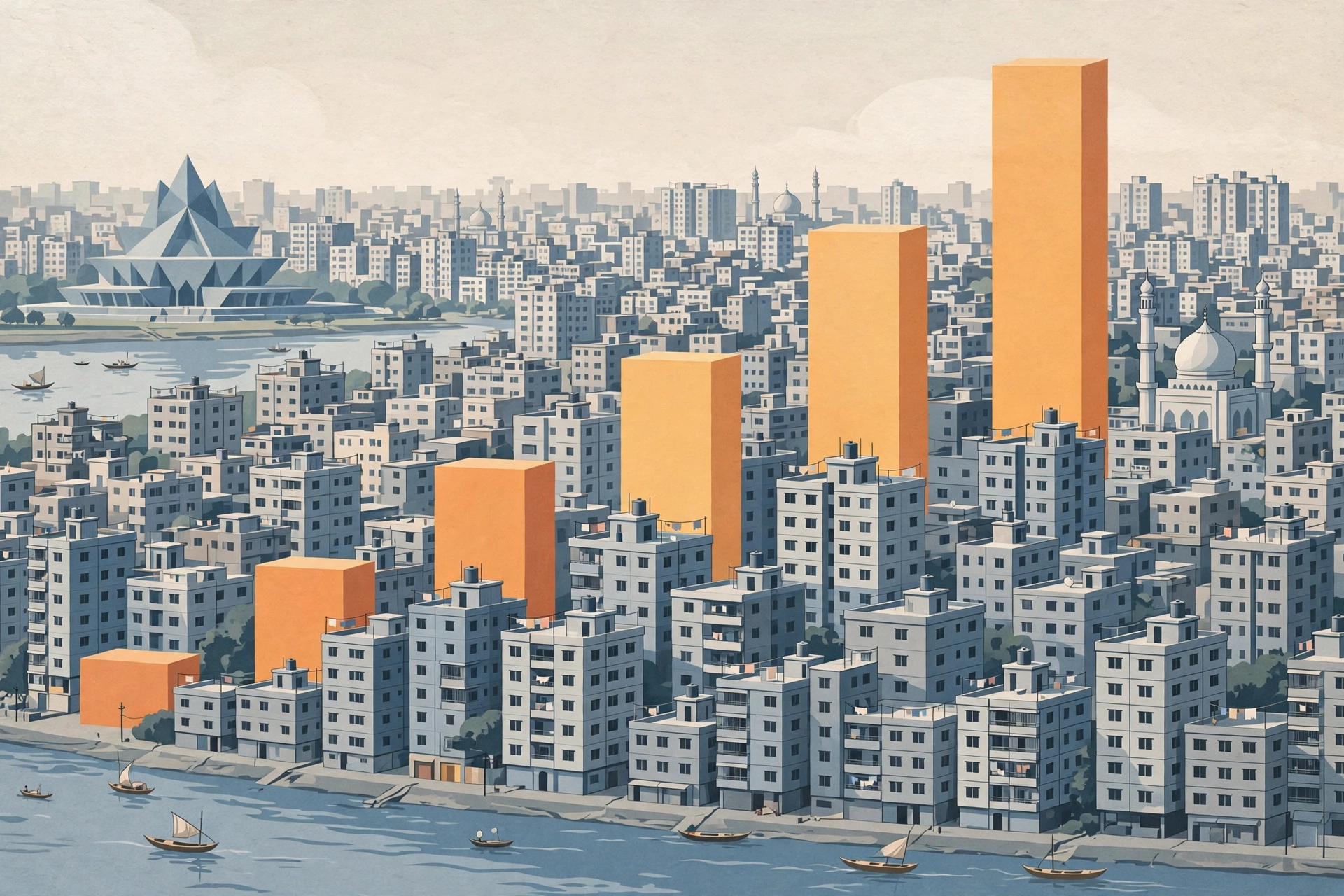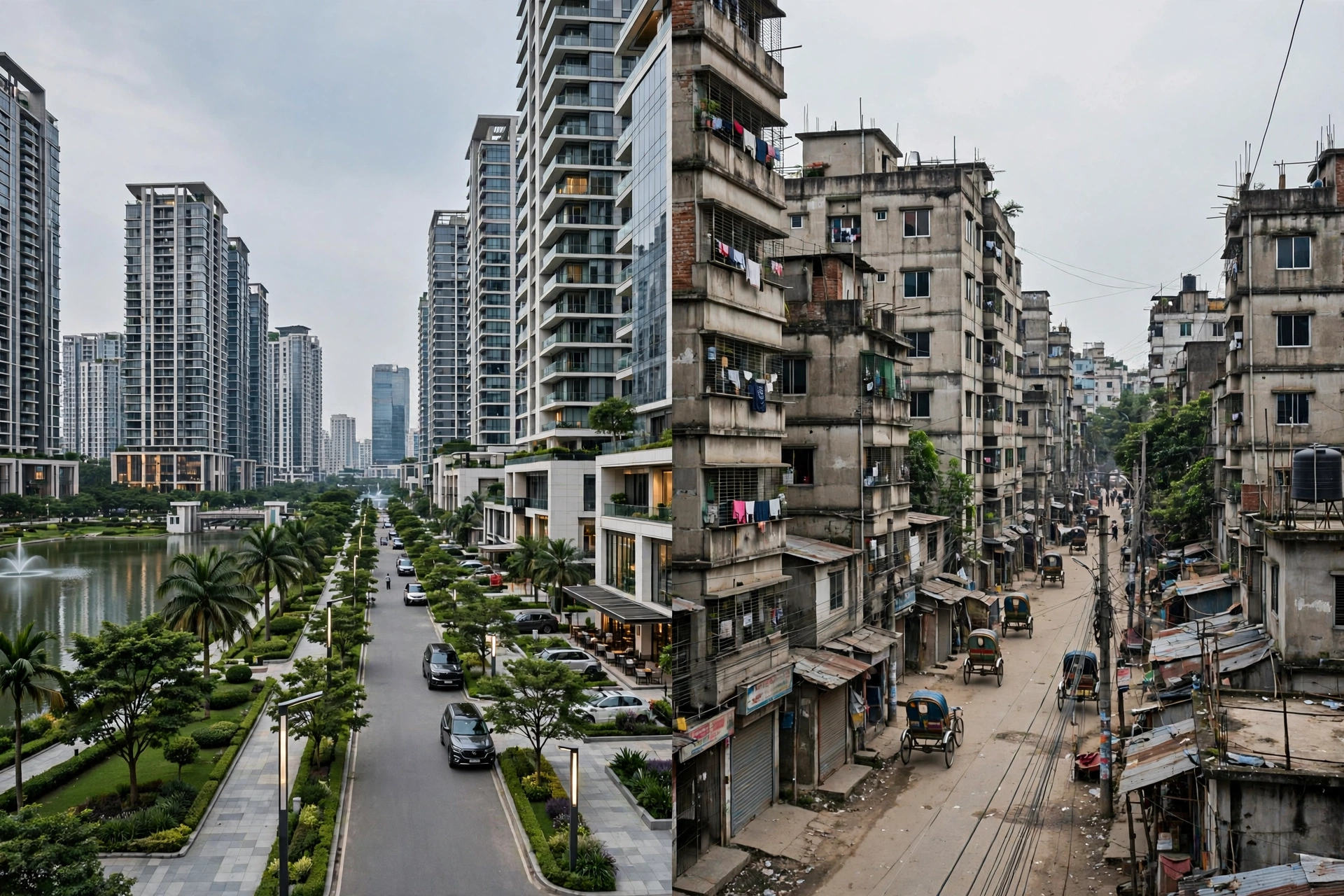
Walk from Gulshan to Mirpur and you cross more than geography. You cross a price divide that defines Dhaka's housing market. In prime zones such as Gulshan, Banani and Baridhara, asking prices commonly range from Tk15,000 to Tk30,000 per square foot, and higher for premium stock. In Mirpur and parts of Uttara, the range is far lower, typically Tk5,000 to Tk15,000 per square foot, according to 2026 market listings.
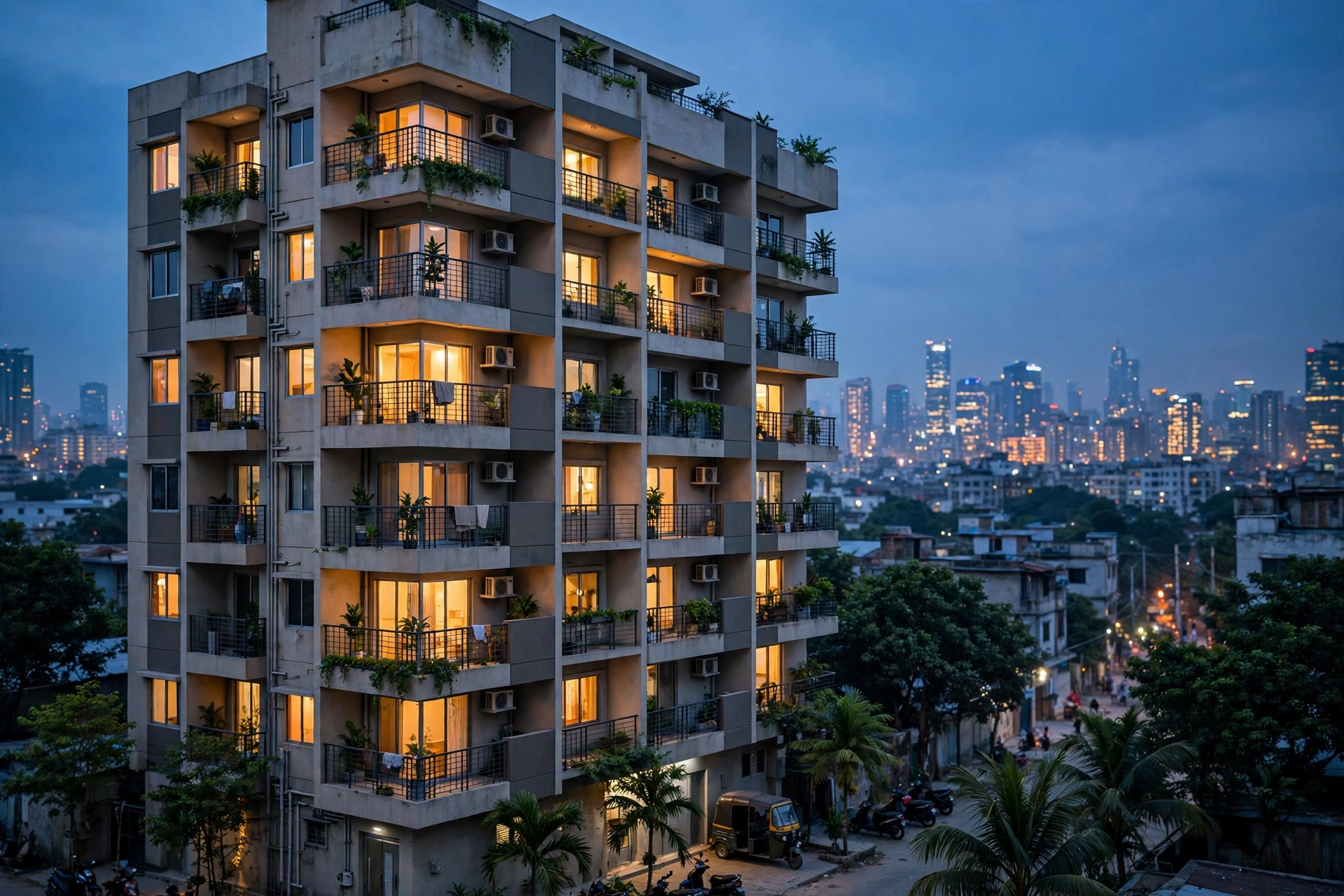
The divide is not simply about prestige. Prime areas offer scarcity — little vacant land, diplomatic and corporate demand, established schools and hospitals — while mid-market areas offer scale, metro access and newer stock. Uttara's appeal, for example, rests heavily on its planned layout and airport proximity. Mirpur's rests on relative affordability and a deep local market of families and renters.
The middle is where the market moves
Prime prices grab headlines, but mid-market transactions drive volume. Families priced out of Dhanmondi or Banani do not leave Dhaka; they move outward, or they buy smaller. That is why a modest price correction in one mid-market area — market data showed Mirpur softening year on year even as Gulshan rose sharply — matters more to ordinary buyers than a record price in a diplomatic enclave.
- Prime buyers pay for scarcity, security and established amenities.
- Mid-market buyers pay for connectivity, new stock and room to grow.
- Investors should weigh rental demand, not headline price growth alone.
In Dhaka, location still decides price — but connectivity is fast catching up with prestige.
What this means for 2027
If infrastructure keeps improving in the north and east of the city, the divide may narrow at the edges, not because prime prices fall, but because well-connected mid-market areas become more liveable. Buyers who focus only on postcode prestige may miss the steadier story: the neighbourhoods where ordinary families can actually buy, rent and stay.